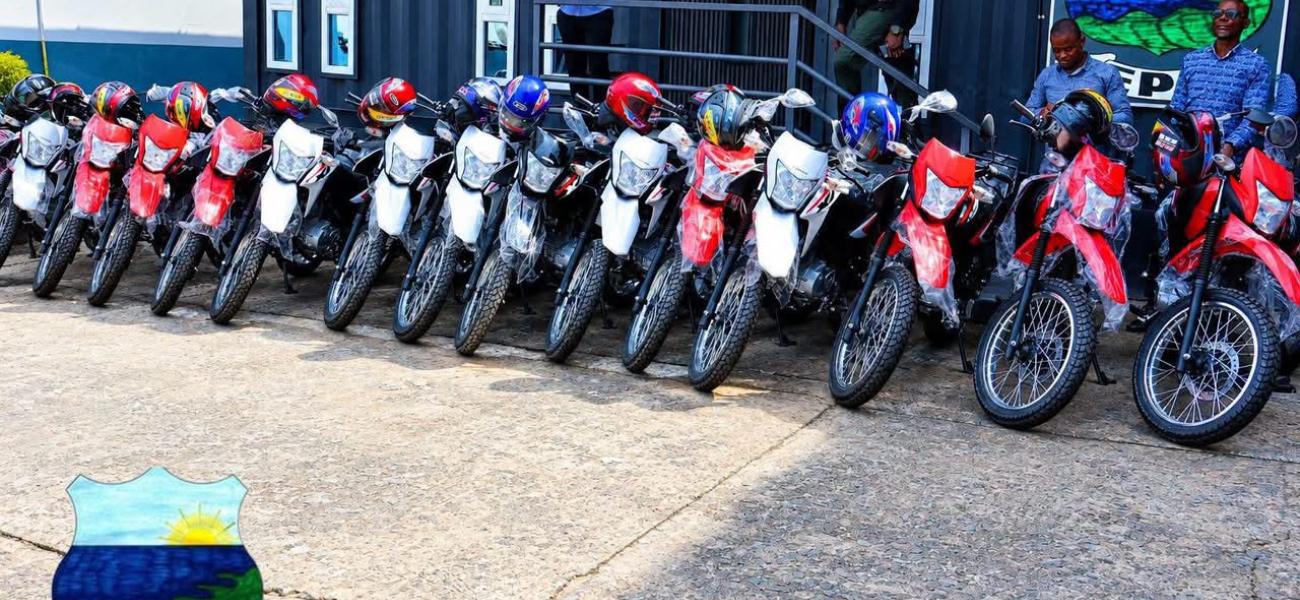
MONROVIA, Liberia– The Environmental Protection Agency (EPA) of Liberia has received 15 brand-new Honda motorcycles from the Government of Liberia through the Health Security Project to strengthen environmental monitoring, improve field inspections, and support efforts to prevent and respond to health emergencies across the country.
The donation underscores the importance of environmental protection in safeguarding public health and forms part of the Government’s broader commitment to strengthening national health security through the One Health approach.
The Health Security Project is a Government of Liberia initiative jointly implemented by the Ministry of Health, the Ministry of Agriculture, and the EPA. The project seeks to build national capacity to prevent, detect, and respond to health emergencies by promoting collaboration across human, animal, and environmental health.
Under the initiative, the Ministry of Health leads the human health component, the Ministry of Agriculture oversees animal health, while the EPA is responsible for addressing environmental health concerns.
Presenting the motorcycles on Wednesday, October 14, 2026, Mr. Rafael Ngumbu, Director of the EPA’s Department of Environmental Research and Radiation Safety and focal point for the project, said the donation would strengthen the Agency’s ability to carry out environmental surveillance and field activities, particularly in the counties.
Mr. Ngumbu emphasized that the environment plays a critical role in the One Health approach, explaining that protecting environmental quality helps reduce health risks for both humans and animals.
He noted that the motorcycles would improve the mobility of EPA inspectors and enable them to access communities and locations where environmental monitoring and compliance inspections are needed.
He further disclosed that the Health Security Project is providing additional support to the EPA, including 15 laptops, laboratory equipment valued at approximately US$200,000, and postgraduate scholarships to strengthen the Agency’s technical expertise.
According to Mr. Ngumbu, one EPA staff member is pursuing a master’s degree in environmental chemistry, while arrangements are being made for a second scholarship, preferably for a female staff member, to study environmental microbiology.
He explained that these interventions are intended to improve the EPA’s capacity in environmental surveillance, chemical management, radiation safety, water quality, and waste management.
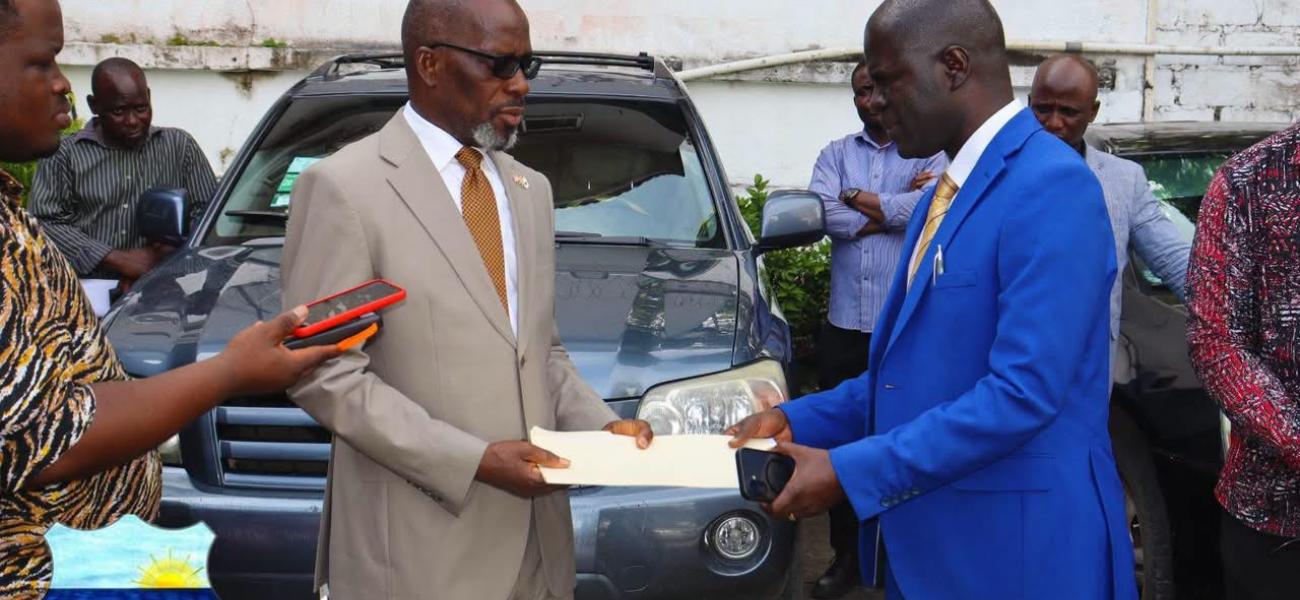
Receiving the motorcycles, EPA Executive Director Dr. Emmanuel K. Urey Yarkpawolo thanked the Government of Liberia, through the Health Security Project, for providing the equipment to support the Agency’s operations.
Dr. Yarkpawolo said he had emphasized the need for durable, high-quality motorcycles during discussions on the project, stressing that the equipment must be capable of operating in rough terrain and meeting the demands of environmental fieldwork.
He noted that reliable transportation is essential for environmental officers to carry out inspections, monitor potential environmental threats, and respond to concerns in communities across Liberia.
The Executive Director also expressed appreciation to Senator Edwin Melvin Snowe Jr., Chairman of the Senate Committee on Hydrocarbon, Energy and Environment, and Representative Jeremiah Garwo Sokan Sr., Chairman of the House Committee on Lands, Mines, Energy, Natural Resources and Environment, for their oversight and support to the EPA.
For his part, Representative Sokan welcomed the donation and commended the Agency for its continued efforts to improve its operational capacity and provide staff with the tools needed to perform their duties.
He observed that investments in logistical support and improved working conditions are important to strengthening staff performance and enabling environmental officers to deliver more effectively on the EPA’s mandate.
Representative Sokan also urged the Agency to ensure that the motorcycles are properly used and maintained, emphasizing the importance of protecting the equipment and ensuring that it serves its intended purpose.
The 15 motorcycles are expected to improve the movement of EPA inspectors and strengthen the Agency’s presence in the field, particularly in areas where transportation challenges can limit environmental surveillance.