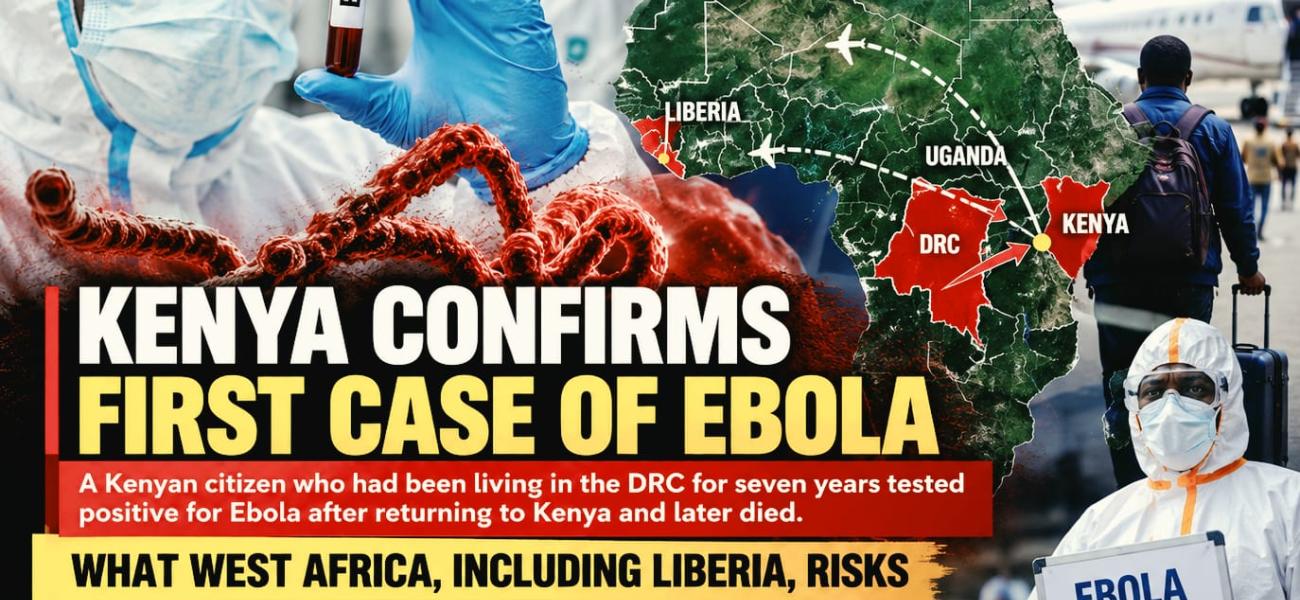
Kenya has confirmed its first case of Ebola Virus Disease, sparking continent-wide alarm and forcing West African nations including Liberia to confront urgent questions about disease surveillance, border security, and readiness for another public health emergency.
Kenya's Ministry of Health announced on Monday, October 6, 2026, that a Kenyan citizen who had lived in the Democratic Republic of Congo for seven years had tested positive for Bundibugyo Ebola virus disease after returning to Nairobi. The patient later died, becoming Kenya's first confirmed Ebola fatality in this outbreak.
According to a joint statement from Kenya's Ministry of Health and the World Health Organization (WHO), the man first developed symptoms while still in the DRC. He then traveled overland through Uganda and boarded a flight to Kenya on October 3, passing through multiple checkpoints before his infection was confirmed in Nairobi.
The case has exposed a dangerous vulnerability in Africa's disease detection system. Despite existing airport screening and border surveillance measures across multiple countries, the patient was not flagged until he sought medical care in Nairobi. By Tuesday, October 7, Kenyan health authorities said they had traced 57 contacts and quarantined 10 people as a precaution.
Health experts say the development underscores why thermal scanners and border checks alone cannot stop Ebola. In its early stages, Ebola can mimic malaria, typhoid, and other common fevers — making it difficult to detect without laboratory confirmation and trained clinicians.
For Liberia, the news has triggered painful memories and urgent policy questions.
Between 2014 and 2016, Liberia, Guinea, and Sierra Leone endured the deadliest Ebola epidemic in recorded history. More than 11,000 people died across the three countries, including nearly 5,000 in Liberia. Hospitals collapsed, schools were shut for months, businesses closed, and entire communities were quarantined. Healthcare workers, who stood on the frontline without adequate protective equipment in the early months, paid a particularly heavy price.
That epidemic revealed deep gaps in Liberia's health system — weak surveillance, poor laboratory capacity, lack of isolation units, slow emergency coordination, and mistrust between citizens and authorities. It also showed the power of community engagement, as Liberians eventually turned the tide through community-based surveillance, safe burial practices, and public awareness.
Ten years later, experts are asking whether those lessons have been institutionalized.
Africa CDC on Tuesday called on all African Union member states to immediately strengthen surveillance, laboratory readiness, rapid-response capacity, infection prevention and control, and cross-border information sharing following Kenya's confirmation.
The current outbreak is caused by the Bundibugyo strain of Ebola virus, not the Zaire strain that caused the West Africa epidemic. This distinction is critical because vaccines and monoclonal antibody treatments developed for the Zaire strain, including the Ervebo vaccine, do not necessarily offer protection against Bundibugyo. There is currently no licensed vaccine for Bundibugyo Ebola.
The outbreak in the DRC remains severe. According to data from the U.S. Centers for Disease Control and Prevention (CDC) as of October 5, 2026, the DRC has recorded 8,665 confirmed cases and 4,178 confirmed deaths linked to the ongoing outbreak. The WHO has assessed the highest regional risk for countries directly bordering the DRC, due to high cross-border movement, but warns that international travel means no country can consider itself immune to an imported case.
Liberia, with Roberts International Airport serving regional and international flights, plus porous land borders with Guinea, Sierra Leone, and Côte d'Ivoire, and active seaports in Monrovia, Buchanan, and Greenville, maintains multiple potential entry points for infectious diseases.
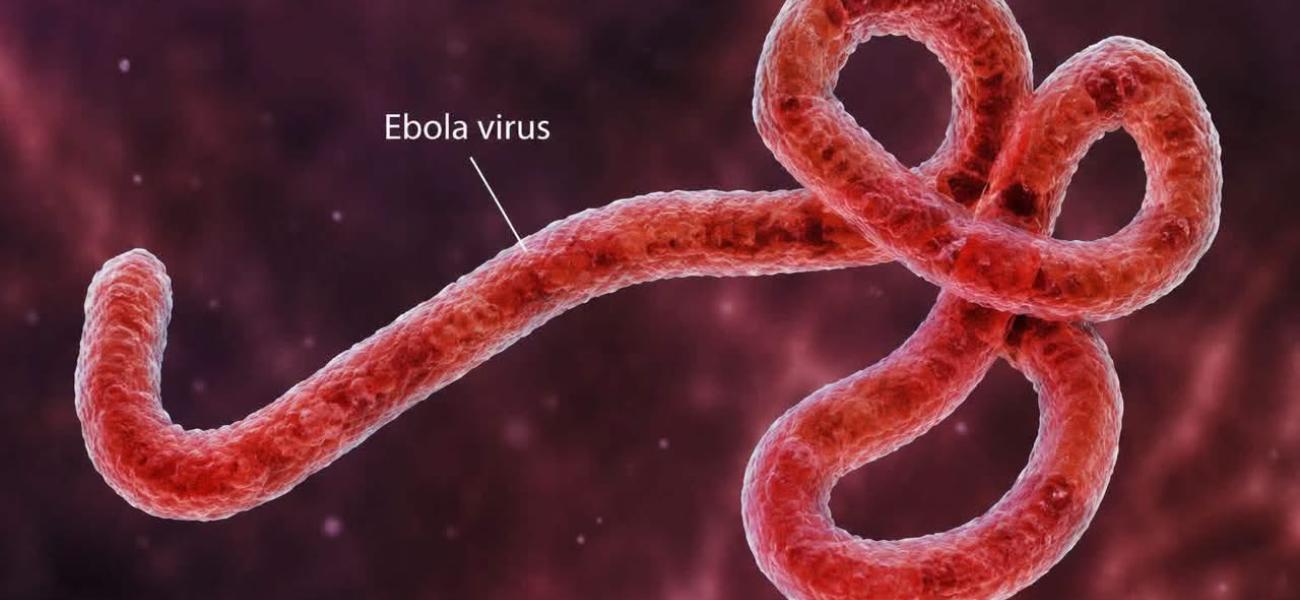
Public health specialists interviewed by HardFacts say Liberia now needs to focus on five urgent priorities before any case appears.
First, surveillance at all major points of entry must be reviewed — not just temperature checks, but proper referral systems, isolation holding areas, and trained port health officers who can identify suspected cases and safely transfer them for testing.
Second, emergency readiness must be audited. Are the designated Ebola Treatment Units that were built during and after the 2014 epidemic still functional? Are laboratories at the National Public Health Institute of Liberia (NPHIL) equipped to rapidly test Bundibugyo virus? Are rapid-response teams at national and county levels equipped and ready to deploy within 24 hours?
Third, frontline health workers must be protected. During the 2014 epidemic, healthcare-associated infections amplified transmission. Ensuring adequate personal protective equipment (PPE), infection prevention training, and safe triage procedures in clinics and hospitals is non-negotiable.
Fourth, regional cooperation must be deepened. Liberia shares epidemiological destiny with Guinea, Sierra Leone, and Côte d'Ivoire. Real-time information sharing with the Mano River Union, ECOWAS, Africa CDC, and WHO is essential.
Fifth, communication must be transparent and evidence-based. Ebola spreads through direct contact with blood, vomit, stool, and other bodily fluids of a sick person, or with contaminated surfaces. It is not airborne like COVID-19 or tuberculosis. Communities need clear information about symptoms, when to seek care, and how to protect themselves, without triggering panic or stigma against travelers.
The economic stakes are also high. Liberia's economy depends heavily on cross-border trade, mining, agriculture, and small market activities. During the 2014-2016 epidemic, economic growth collapsed, markets closed, and livelihoods in border communities were devastated. Even fear of Ebola, without a single case, can disrupt trade, transport, and investment confidence.
For now, there is no confirmed Liberian case associated with the current outbreak, and health authorities have not declared an emergency. Officials at the Ministry of Health and NPHIL are expected to issue a public update in the coming days on the country's preparedness level.
But as Kenya's experience shows, a virus can travel from the forests of central Africa to an East African capital in days, crossing multiple borders undetected.
Liberia as a country that has already buried thousands from Ebola — the lesson is clear: Waiting until a case is confirmed is too late. Prevention is cheaper, safer, and more humane than another national tragedy.