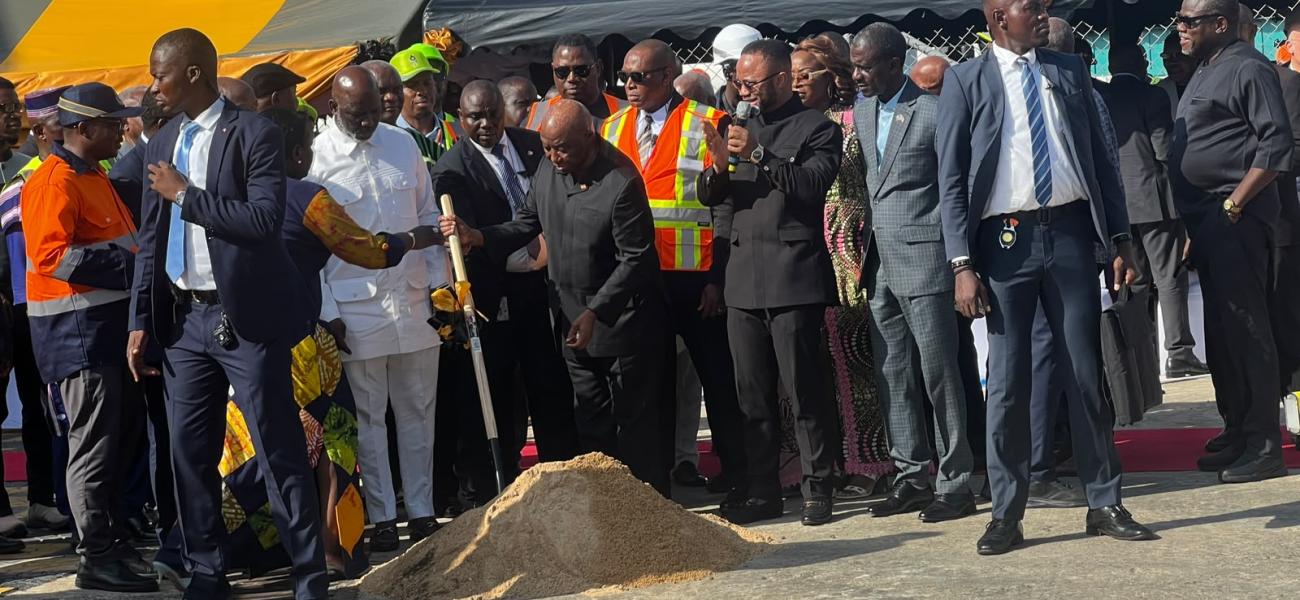
MONROVIA, Liberia — President Joseph Nyuma Boakai has dedicated a modern Petroleum Product Testing Laboratory and a 12,800-metric-ton Premium Motor Spirit (PMS) storage tank at the Liberia Petroleum Refining Company (LPRC), while breaking ground for a US$35 million Product Storage Terminal Expansion and Modernization Project aimed at strengthening Liberia’s energy security and expanding national petroleum storage capacity.
The ceremony, held on Monday, October 26, 2026, at the LPRC Product Storage Terminal, marked a significant development in the government’s efforts to improve petroleum infrastructure, strengthen product quality assurance, and enhance the country’s capacity to manage the supply and distribution of refined petroleum products.
Speaking at the occasion, President Boakai described the projects as evidence of continuity, responsible investment, and institutional commitment to national development.
“Energy security is fundamental to our nation’s economic stability and long-term development,” President Boakai said, emphasizing that transportation, agriculture, mining, industry, commerce, and essential public services depend on the reliable availability of petroleum products.
The President recalled that his first visit to the facility marked the groundbreaking for the construction of the petroleum testing laboratory and the 12,800-metric-ton storage tank. His second visit, he said, witnessed LPRC’s first-ever direct importation of refined petroleum products.
He noted that his latest visit represented the completion of the two facilities and the launch of another major investment in Liberia’s petroleum infrastructure.
Boakai warned that Liberia’s dependence on imported refined petroleum products leaves the country vulnerable to international supply disruptions, logistical challenges, and fluctuations in global petroleum prices.
He said investments in storage infrastructure, petroleum quality assurance, modern logistics, and operational safety were necessary to reduce these vulnerabilities and improve the country’s ability to respond to supply challenges.
According to the President, the new petroleum testing laboratory will strengthen Liberia’s capacity to verify petroleum quality, protect consumers, and promote product integrity, while the new storage tank will expand LPRC’s storage infrastructure and support more reliable petroleum supplies.
US$35 Million Expansion to Add 50,000 Metric Tons
President Boakai disclosed that the US$35 million Product Storage Terminal Expansion and Modernization Project would add 50,000 metric tons of commercial petroleum storage capacity, bringing the terminal closer to modern operational standards.
The project will include automated systems, improved operational infrastructure, enhanced safety facilities, coastal defense infrastructure, and land reclamation.
It will also introduce Liberia’s first petroleum marine back-loading capability, allowing petroleum products to be transferred from shore-based storage facilities onto vessels for coastal and regional distribution.
President Boakai said the additional capacity could position Liberia to explore opportunities in regional petroleum storage and distribution, citing the country’s geographical location along the West African coast.
He further disclosed that LPRC’s share of Liberia’s total petroleum storage capacity is expected to increase from approximately 29 percent at the beginning of his administration to about 50 percent upon completion of the expansion project.
The President stressed, however, that the objective extends beyond constructing additional storage facilities.
“Our objective is to strengthen Liberia’s energy security, improve national economic resilience, and create the conditions for greater investment, productivity, and prosperity,” he said.
Boakai emphasized that the success of the investments should be measured by their contribution to economic growth, employment creation, energy security, and improved livelihoods rather than by the size of the infrastructure alone.
Boakai Calls for Accountability and Local Participation
President Boakai urged the LPRC Board of Directors and Management to ensure that the newly dedicated facilities are properly maintained and that the expansion project is implemented with financial discipline, technical quality, environmental responsibility, and operational safety.
He also called for greater participation by qualified Liberian workers, contractors, and businesses, stressing that infrastructure investments should create employment opportunities and promote technical skills development.
The President commended LPRC Board Chairman Hon. Aaron J. Wheagar I, Managing Director Hon. Amos B. Tweh, and the company’s management and employees for their contributions to the projects.
He particularly praised Tweh’s leadership, describing the progress at LPRC as an example of what young Liberians can accomplish when entrusted with responsibility and given the opportunity to demonstrate their abilities.
Boakai also acknowledged Lutech Engineering, the implementing partner for the expansion project, and called for professionalism, quality work, and timely execution.
He reaffirmed his administration’s commitment to supporting responsible infrastructure investments that advance Liberia’s development priorities and serve the long-term interests of its citizens.
Finance Minister Challenges Institutions to Increase Revenue
Meanwhile, Finance and Development Planning Minister Augustine Kpehe Ngafuan challenged government institutions to intensify efforts to generate revenue and contribute meaningfully to national development.
Ngafuan said Liberia’s US$1 billion national budget had created significant expectations among citizens, placing greater responsibility on public institutions to deliver results.
He urged government agencies to move beyond routine operations and pursue practical measures to increase revenue generation in support of the government’s development agenda.
The Finance Minister also commended LPRC for maintaining the availability of petroleum products amid global crises and market pressures that have contributed to tensions and protests in other parts of the world.
His remarks underscored the importance of reliable petroleum supplies to economic stability and the need for public institutions to strengthen their contribution to the national revenue envelope.
LPRC Targets Modernization and Increased Revenue
For his part, LPRC Managing Director Amos B. Tweh reaffirmed the company’s commitment to continuously expanding and modernizing its facilities to improve operational efficiency, strengthen petroleum storage capacity, and increase its contribution to Liberia’s national budget.
Tweh said the projects would support job creation and enhance revenue generation, positioning LPRC to play a greater role in the country’s economic development.
He emphasized the company’s ambition to establish a modern petroleum storage terminal with capacity and operational capabilities unprecedented in Liberia’s history.
The managing director’s remarks aligned with the government’s broader expectations that state-owned institutions should demonstrate measurable results, strengthen their operations, and generate greater economic benefits for the public.
The addition of the new storage tank and laboratory, alongside the planned terminal expansion, is expected to improve LPRC’s infrastructure and provide a stronger foundation for its future commercial activities.
A New Chapter for Liberia’s Petroleum Sector
The dedication and groundbreaking ceremony represents a significant step in LPRC’s ongoing transformation, combining completed infrastructure investments with a new expansion initiative intended to increase storage capacity and introduce additional petroleum-handling capabilities.
For Liberia, where petroleum imports remain essential to transportation, industry, commerce, and public services, the ability to store, test, and distribute petroleum products efficiently is central to maintaining supply reliability and reducing exposure to external market disruptions.
The planned expansion also presents opportunities for employment, technical development, and regional commercial engagement, although the extent of these benefits will depend on effective implementation, sound management, and the project’s long-term operational performance.
As the US$35 million project moves forward, attention will turn to the timely completion of the works, the realization of the projected storage capacity, and LPRC’s ability to translate the investments into improved energy security, increased revenue, and tangible economic benefits for the Liberian people.