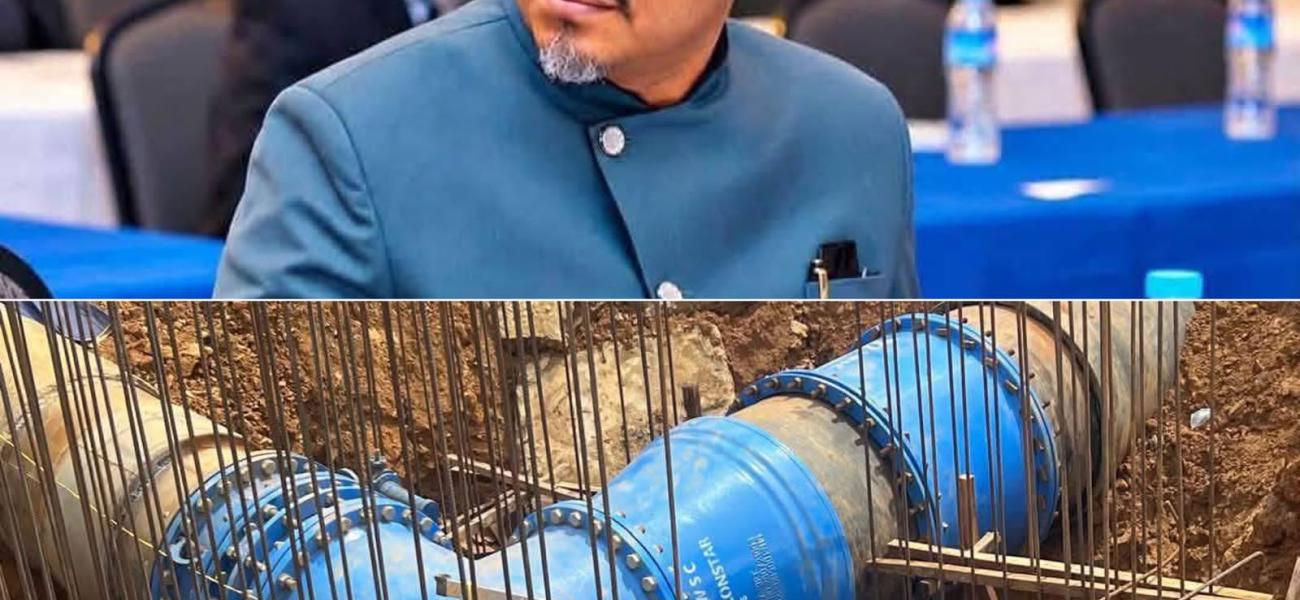
MONROVIA, Liberia, — The Liberia Water and Sewer Corporation (LWSC) is set to commission a completed 10-kilometer section of a 48-inch water transmission main on Tuesday, October 27, at the White Plains Water Treatment Plant in Montserrado County.
The pipeline, constructed under the Liberia Urban Water Supply Project (LUWSP) with support from the World Bank, is expected to strengthen water transmission infrastructure and improve access to safe and reliable pipe-borne water for residents of Monrovia and surrounding communities.
The commissioning marks a significant milestone in the government’s efforts to address longstanding challenges in Liberia’s urban water sector, including aging infrastructure, limited access to piped water, and increasing demand resulting from population growth.
The Liberia Urban Water Supply Project is implemented by LWSC through its Project Implementation Unit, with financial and technical support from the World Bank.
The project focuses on rehabilitating existing water infrastructure, constructing and replacing pipelines, expanding distribution networks, and strengthening the corporation’s institutional capacity to improve service delivery.
According to the project’s objectives, the initiative seeks to expand access to safe and reliable water for households and public facilities while improving LWSC’s financial, technical, and administrative performance.
Other interventions include the rehabilitation and expansion of water distribution networks, the construction of storage facilities such as the Paynesville reservoir, the installation of parallel transmission pipelines to ease supply bottlenecks, and improvements to the White Plains Water Treatment Plant.
The completed 10-kilometer section of the 48-inch transmission main is expected to improve the movement of treated water from the White Plains Water Treatment Plant into the distribution network serving Monrovia and nearby communities.
The infrastructure is also expected to help ease transmission constraints and support more reliable water delivery as demand for urban water services continues to grow.
However, the extent to which the new pipeline will improve water availability for individual communities will depend on factors including treatment capacity, distribution network performance, and the corporation’s operational efficiency.
The corporation has expressed appreciation to the World Bank for its continued support and acknowledged the contributions of stakeholders involved in implementing the Liberia Urban Water Supply Project.
LWSC says it remains committed to expanding access to safe and reliable pipe-borne water, strengthening its operational capacity, and improving water services across Liberia.
The October 27 commissioning ceremony at the White Plains Water Treatment Plant is expected to highlight progress in the country’s ongoing efforts to modernize its water infrastructure and address the growing needs of Monrovia and surrounding communities.