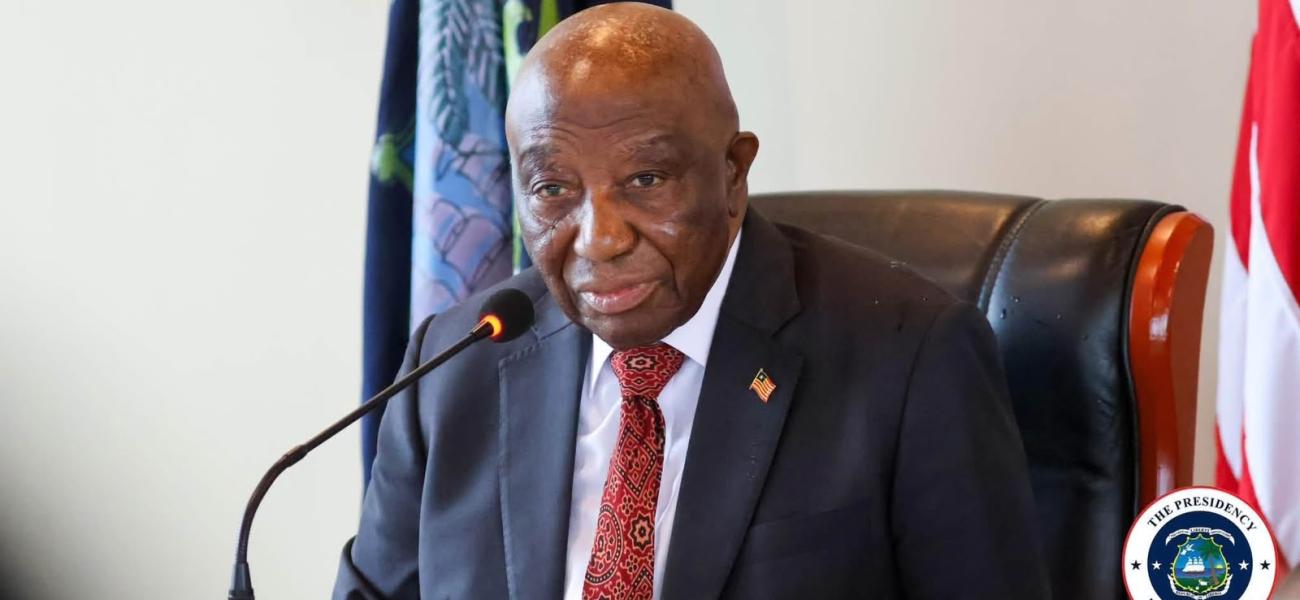
MONROVIA_President Joseph Nyuma Boakai has signed into law legislation establishing the Liberia National Sports Fund Authority, ushering in what lawmakers and sports stakeholders describe as a potentially transformative new chapter for the financing and development of sports across Liberia. The legislation, formally titled the “Act to Create the National Sports Fund Authority,” creates a dedicated public institution responsible for mobilizing, managing and disbursing resources for sports development, athlete welfare, infrastructure, grassroots programs and national-team activities.
The law was sponsored by River Gee County Senator Jonathan Boye-Charles Sogbie, a former Liberian national-team footballer, and was approved by the Senate on July 23, 2025, before receiving concurrence from the House of Representatives and ultimately being signed by President Boakai. Sogbie, speaking on Monday, August 17, 2026, described the legislation as a potential “lifeline” for Liberian athletes, arguing that it responds to longstanding problems of irregular financing, inadequate facilities, limited athlete support and insufficient investment in the country's sporting ecosystem. “This law ensures sustainable and transparent financing for sports,” Sogbie said. Under the legislation, the National Sports Fund is expected to draw resources from a combination of levies on selected goods, government budgetary allocations, grants, donations and other approved sources of revenue.
Earlier details surrounding the bill indicated that proposed levies would target selected imported goods, including apparel, footwear, cosmetics and luxury vehicles, with the original proposal identifying a 2 percent levy on qualifying luxury imports as one of the fund's potential revenue streams. The law is designed to ensure that resources generated specifically for sports are directed toward sportsrelated priorities rather than being absorbed into general government expenditure. Among the areas expected to benefit are: Construction and rehabilitation of sporting facilities; Support for national teams and athletes; Grassroots and youth sports development; Athlete training and talent identification; Coaching and technical development; Support for national sporting federations; Sports programs across Liberia's 15 counties; and Other activities considered essential to national sports development. The legislation also introduces an institutional framework intended to strengthen transparency and accountability in the management of sports resources. The Authority will be governed by a Board of Directors, while the Legislature will exercise oversight. Earlier legislative provisions also called for annual independent audits, with financial reports expected to provide greater public accountability for money raised and spent through the fund.
The proposed governance structure is significant because Liberia's sports sector has historically depended heavily on government appropriations, sponsorships and emergency interventions to finance national competitions and international commitments. The new authority therefore represents an attempt to move sports financing from an ad-hoc model toward a more institutionalized and predictable funding system. The legislation comes against a backdrop of persistent financial difficulties confronting Liberian sports. Liberia's 2025 national budget allocated approximately US$5.71 million to the Ministry of Youth and Sports, including about US$4.21 million in recurrent government funding and US$1.5 million in donor-supported resources, according to the enacted budget data. The financing challenge extends beyond the ministry itself.
In 2026, the Ministry of Youth and Sports reported that its budget was approximately US$9.1 million, with roughly US$2.1 million earmarked for grants to sporting federations. Officials from the Liberia Football Association and Liberia Basketball Federation have continued to identify debts, delayed reimbursements, international competition costs and logistical constraints as major obstacles to development. The situation has sometimes forced government to make emergency interventions.
In 2024, for example, the government provided more than US$309,000 to facilitate the Lone Star's travel for international matches, while additional funds were used to address coaching salaries and training-related expenses. These examples illustrate why advocates of the new Sports Fund argue that Liberia needs a permanent financing mechanism rather than relying predominantly on annual appropriations and emergency support. The new law also arrives as the Boakai administration seeks to increase public investment in sports. The 2026 draft budget proposed a substantial increase for several sporting disciplines. Football, for instance, was allocated approximately US$1.07 million, nearly doubling the reported previous allocation of US$550,000. Chess increased from US$5,000 to US$50,000, while basketball received approximately US$22,700 and kickball about US$13,915 under the draft allocations reported in November 2025.
At the same time, the government has been emphasizing decentralization and grassroots development. In June 2026, the Ministry of Youth and Sports engaged the Inter-School Sports Association over efforts to strengthen school competitions and establish a more structured national scouting system capable of identifying talented athletes at county level. The ministry said the National U-15 Football Competition had already involved schools from across Liberia during the 2024/25 academic year. For decades, Liberian sports have produced athletes who have achieved international recognition despite limited domestic infrastructure and financial support. Football remains the country's most prominent sporting discipline, with the Lone Star serving as one of Liberia's strongest symbols of national identity.
Yet national teams and federations have frequently faced challenges involving transportation, accommodation, training facilities, equipment, coaching expenses and participation fees. Liberia's experience is particularly notable given its place in African football history. The country produced George Weah, who became the first African player to win the FIFA World Player of the Year and Ballon d'Or in 1995. His rise demonstrated the enormous potential of Liberian talent when athletes receive access to professional development opportunities. The challenge now is to create a domestic system capable of producing more athletes who can follow that path.
While the signing of the law represents a significant legislative milestone, its ultimate impact will depend on implementation. The creation of an authority does not automatically guarantee additional resources. The government and lawmakers will still have to establish the institution, appoint qualified leadership, create effective revenue-collection mechanisms, protect the fund from political interference and ensure that money reaches athletes and sporting programs as intended. Sports federations will also face greater expectations for accountability if they are to benefit from the new financing structure. For athletes, coaches and administrators, however, the law represents a potentially important shift.