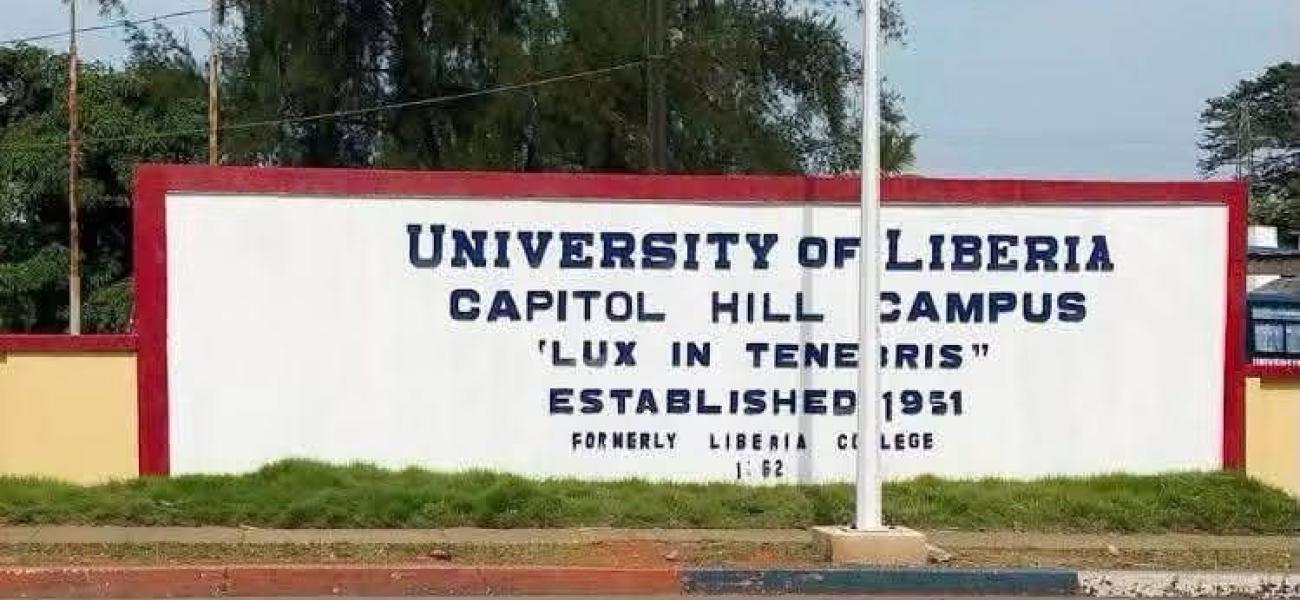
MONROVIA, Liberia — Senator Amara Konneh has called for sweeping reforms in the governance and financing of the University of Liberia (UL), warning that the country’s flagship public university risks continued decline if its current management structure and funding model remain unchanged.
In a strongly worded commentary, Senator Konneh contrasted conditions at the University of Liberia with those at the African Methodist Episcopal University (AMEU) and United Methodist University (UMU), arguing that the differences demonstrate the need for fundamental changes in how UL is governed and financed.
Konneh said that while students at some private universities experience timely classes, functional facilities, internet access and regular payment of lecturers, UL continues to struggle with overcrowded classrooms, inadequate laboratory equipment, limited internet access and recurring threats of strikes by lecturers.
He attributed the challenges to what he described as a “21st-century challenge with a 19th-century governance model.”
Political Governance
According to Konneh, one of UL’s major problems is the political nature of its governing board.
He noted that the President of Liberia serves as the Visitor of the university and appoints members of its Board, arguing that this arrangement makes the institution vulnerable to political changes and interference.
Konneh is proposing that the Board be depoliticized and transformed into a skills-based governing body comprising academics, private-sector representatives, alumni and students, while the role of the Visitor becomes largely ceremonial.
Funding Crisis
The senator also criticized the university’s current funding structure, particularly the allocation of resources between salaries and other operational needs.
He said Liberia allocated approximately US$34 million to UL, with about US$32 million reportedly consumed by salaries, leaving only US$2 million for essential needs such as laboratories, libraries, internet services, research, toilets and transportation.
Konneh argued that the funding arrangement is unsustainable, particularly following the expansion of enrollment and the government’s free-tuition policy.
He called for the creation of a Higher Education Trust Fund and a revised funding formula that would adequately finance the university on a per-student basis.
Calls for Greater Autonomy
Konneh further argued that UL’s president does not have sufficient authority to effectively manage the institution.
He said the university administration must depend on other government institutions for basic needs, including fuel, security, human-resource matters and financial resources.
The senator therefore urged the government to grant UL greater autonomy over its finances, procurement and staffing, while maintaining strong oversight mechanisms.
Under his proposed model, the university would operate under a transparent five-year strategic plan and be subjected to public hearings and performance reviews.
Performance and Accountability
Konneh also questioned the extent to which UL’s performance is measured, particularly in areas such as graduation rates, employment outcomes, research and learning achievements.
He argued that enrollment figures alone should not be the principal measure of the university’s success, stressing the need for clear and publicly accessible performance indicators.
He cited the University of Cape Town in South Africa, Cairo University in Egypt, the University of Ibadan in Nigeria and Makerere University in Uganda as examples of public universities that receive government support while maintaining significant institutional autonomy.
According to Konneh, such institutions also supplement government funding through research, endowments, short courses and partnerships.
Three Urgent Reforms
The senator proposed three major reforms to address UL’s challenges:
First, depoliticize the university’s governing board and make it skills-based.
Second, reform the funding formula and combine free tuition with a Higher Education Trust Fund to ensure that the university has adequate resources for both salaries and essential academic services.
Third, grant UL greater administrative and financial autonomy, while requiring the institution to operate under a transparent five-year plan and remain accountable through public oversight.
Konneh said he did not attend the University of Liberia but acknowledged the role of former UL student activists who later became leaders in government, business and civil society.
He expressed concern that decades after those activists demanded improved educational conditions, students at UL continue to face some of the same basic challenges.
“Free education without proper funding is not truly free — Liberian children pay the price through poor quality,” Konneh said.
He concluded by warning that Liberia cannot build a knowledge-based economy while its flagship university remains under severe institutional and financial pressure.
“We cannot build a knowledge economy with a collapsing flagship university,” he emphasized, adding that UL’s motto, “Lux in Tenebris” — Light in Darkness — cannot fully shine if its governance structure remains stuck in the past.