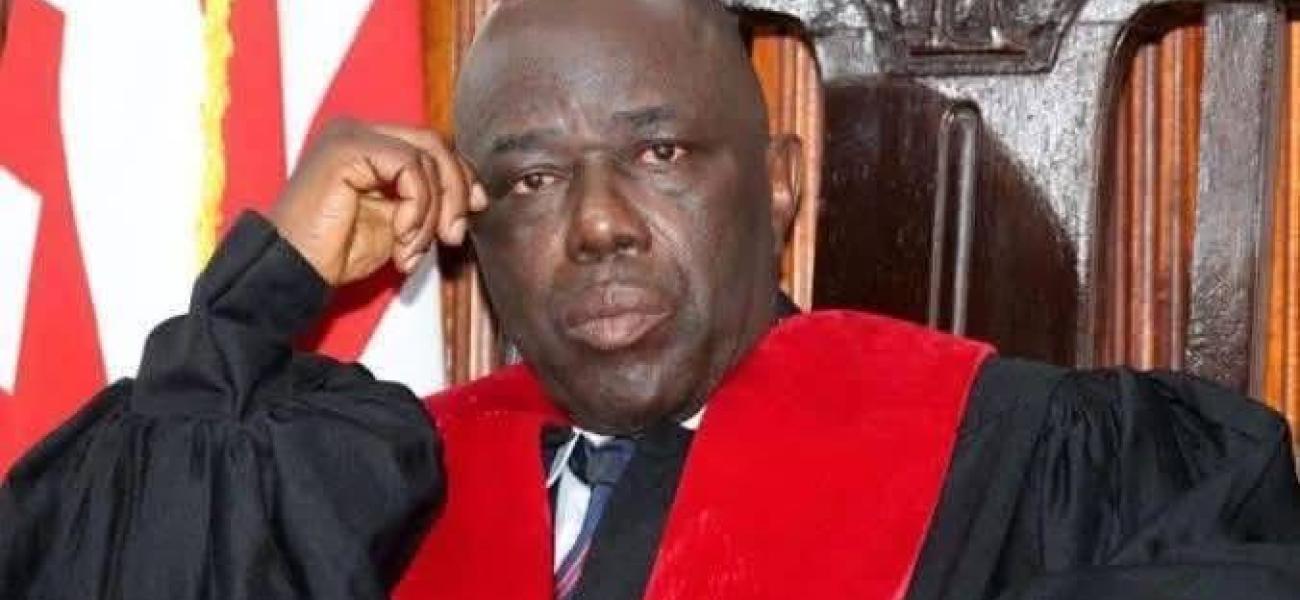
MONROVIA, Liberia — The Supreme Court of Liberia has rejected a petition for a writ of prohibition filed in the ongoing Capitol Building arson case, ruling that the defendants relied on the wrong legal remedy to challenge a trial court decision ordering a new trial.
The ruling, delivered on August 28, 2026, stems from the case surrounding the December 2024 fire at Liberia’s Capitol Building in Monrovia, an incident that occurred amid heightened political tensions linked to the leadership crisis in the House of Representatives.
Several individuals were arrested and charged in connection with the fire, making the case one of Liberia’s most closely watched criminal proceedings.
In its latest judgment, the Supreme Court clarified the legal distinction between prohibition and certiorari, emphasizing that the two writs serve different purposes.
The Court explained that a writ of prohibition is intended to prevent a lower court or tribunal from proceeding when it lacks jurisdiction or is acting beyond the limits of its authority.
By contrast, the Court said, certiorari is the appropriate remedy for challenging an interlocutory ruling by a court that has jurisdiction but is alleged to have acted improperly, irregularly, or contrary to law.
The legal dispute arose after the trial judge disbanded the jury and ordered that the case proceed to a new trial. The defendants subsequently petitioned the Supreme Court for a writ of prohibition, seeking to halt the lower court’s action.
However, the Supreme Court determined that the trial judge possessed both personal and subject-matter jurisdiction over the case.
According to the Court, even if the trial judge’s decision to disband the jury and order a new trial was legally erroneous, such an error did not justify the use of prohibition.
«“The proper remedy should have been the petition for a writ of certiorari to review and correct the ruling and not a petition for prohibition,” the Court stated.
Based on that determination, the Supreme Court quashed the alternative writ, denied the peremptory writ, and directed the Clerk of Court to issue a mandate to the lower court.
The mandate requires the trial court to resume jurisdiction over the case and give effect to the Supreme Court’s judgment.
The decision was signed by Chief Justice Yamie Quiqui Gbeisay Sr. and the Associate Justices of the Supreme Court.
The ruling clears the way for the lower court to continue proceedings in the Capitol Building arson case, which remains under significant public scrutiny.